

Hello, just a quick one from me:
Most things I write on here is free because I don’t believe important conversations should sit behind a paywall. If you enjoy what I do and you’re in a position to support it, you can become a paid subscriber. You’re essentially buying me the time (and probably the coffee) to keep writing essays like this. If you’d like to support my work and help me keep writing, I would be grateful
M x
Shame is my favourite emotion. It has taught me so much about myself and how I view others. When I can feel its claws digging into my ribcage, rearranging my insides and bleeding out for the world to see, I know shame is on my side. Yes, you read that right. I do genuinely believe shame (like all emotions) is on my side.
Pop psychology loves to talk about healing our shame, which, for the most part, makes a lot of sense. Why wouldn’t we want to heal the parts of ourselves that make us feel the most shit? Why wouldn't we want to stop feeling the knot in our stomach every time we replay an awkward conversation, question whether we're good enough or convince ourselves that if people saw who we really were, they'd leave?
We're constantly told that shame is something to overcome. That healing means letting it go, silencing our inner critic and learning to live without it. And whilst I understand where that comes from, I can't help but wonder if we've become so focused on getting rid of shame that we've forgotten to ask why it exists in the first place.
We’ve become accustomed to understanding our sadness, allowing space for our anger, and letting our jealousy poke its head out at times, yet when it comes to shame, we don’t.
Perhaps that’s because shame feels different and arguably, that’s because it is.
Unlike sadness or anger, shame doesn't just tell us that something has happened. It tells us something about who we are (or, at least, what it wants us to believe we are).
It has an extraordinary ability to convince us that our mistakes aren't something we've made, but something we've become. We have not just acted stupidly; we are stupid. We have not just done something embarrassing; we are embarrassing. You see the difference? It’s not what we do or feel; it’s who we are to the core. That's exactly why shame feels so unbearable. We mistake shame for truth.
Shame, however, like many other emotions, doesn't exist to tell us the truth. They exist to tell us something deserves our attention.
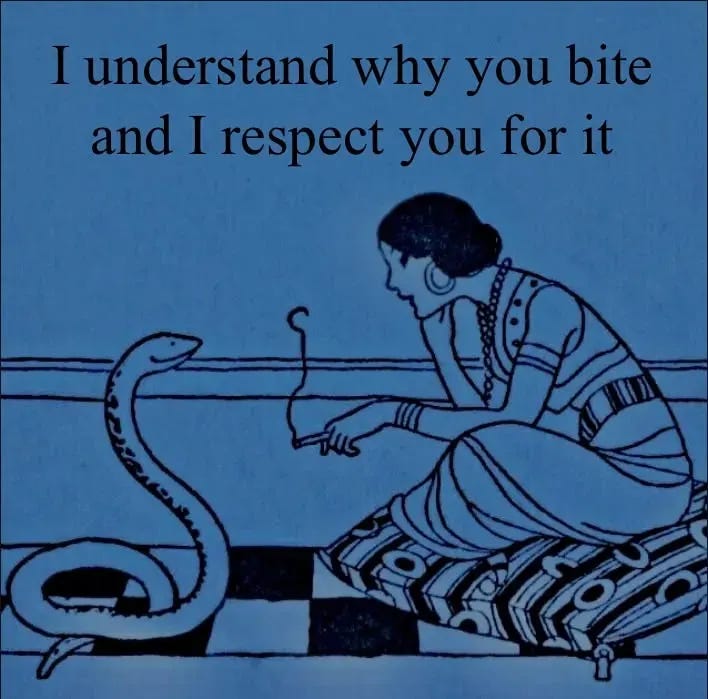
From a very simple evolutionary perspective, shame makes perfect sense. Long before shame became the emotion we associate with embarrassment or humiliation, it functioned as a survival mechanism. It encouraged us to pay attention to the behaviours that might threaten our place within the group, nudging us to repair relationships, adapt and remain connected to the people around us.
In other words, shame wasn’t designed to punish us; it was designed to protect us. That's why shame feels so physical. It's why our stomach drops, our face flushes, our chest tightens, and every instinct tells us to hide. Our brains don't distinguish particularly well between social rejection and physical danger because, for much of human history, the two weren't all that different.
Of course, evolution is only one part of the story. The way we experience shame is also shaped by our earliest relationships, our blueprint, if you will. Attachment theory tells us that our understanding of ourselves is built through our interactions with the people who first cared for us. When our emotions are met with curiosity, comfort and consistency, we learn that our feelings are safe and that we are worthy of love, even when we make mistakes. But when our needs are dismissed, criticised or met with unpredictability, shame can become something much bigger than an occasional emotion; it becomes an identity. Trauma only deepens this.
This is where psychology ends and sociology begins.
Whilst evolution, attachment and other biopsychosocial factors may explain why we experience shame, they don’t explain what we become ashamed of.
After all, nobody is born ashamed of the size of their body. Nobody enters the world embarrassed to cry, ask for help or take up too much space. Babies don't apologise for being loud, toddlers don't worry they're too much, those things have to be taught.
Family, school, religion, culture, social media, politics and gender. Every institution we move through hands us a list of things that are considered acceptable and another list of things that are not. Over time, those messages stop sounding like society, it just becomes who we are.
How many times have you heard your parents or perhaps your grandparents say something like ‘well we all do that’ or ‘that’s just the way we are though’?
Have we ever stopped to ask who we actually are? So many of the beliefs we carry aren't conclusions we've reached ourselves. They're inherited. Passed down through generations, reinforced by the communities around us and repeated so often that they stop sounding like opinions and start feeling like facts.
This is why, as valuable as it is to feel shame and trust me, I am all for feeling our feelings, there should also be room for recognising that shame is information. It's an invitation to become curious. It asks us: what am I responding to here? Does this feeling reflect my own values or someone elses?
Some shame tells us we've acted in a way that doesn't align with the person we want to be. It nudges us towards accountability, repair, and growth. But the shame that tells us we’ve simply failed to meet someone else’s expectations; that we’re too emotional, too loud, too ambitious, too sensitive, too much or somehow never enough is a very different kind of shame altogether.
Shame, to me, is a constant invitation to become curious about ourselves and others. Without using curiosity as a way to intellectualise our feelings, shame invites us to sit with the disgust, discomfort and distress that comes with it, and then become curious about the information it’s trying to give us.
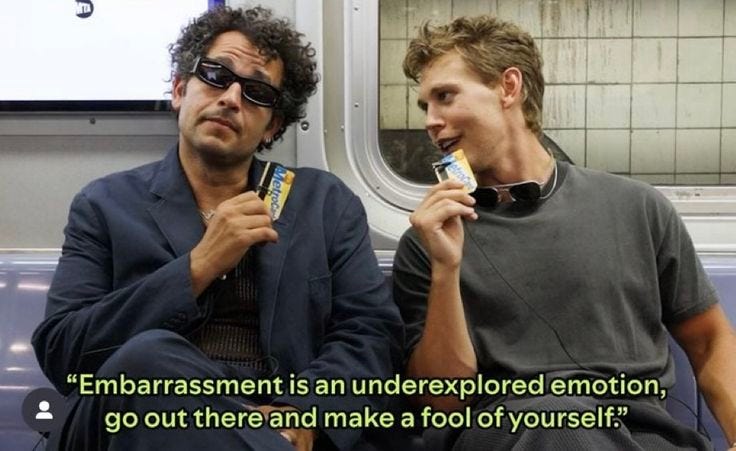
So the next time shame arrives, perhaps we don’t need to rush to silence it.
Perhaps we simply ask it a question: What are you trying to tell me?
The answer may reveal something about who we are or it may reveal everything we’ve been taught to believe we should be.
Either way, shame has done its job. It gave us information.
What we choose to do with it is up to us.
You have no idea how much I needed to read something like this. Thank you for opening the conversation on one of the most misunderstood emotions we possess
Never have i being aweare of the potencial that shame can have over one self, who can i be or become if i understand the meaning of it, it's origin.